Elbow Pain Physiotherapy
Elbow pain is a common complaint that affects people across a wide range of activities and occupations. It can develop from a single incident, build gradually from repetitive tasks, or arise from overuse in sport, gym training, or manual work. Because the elbow connects the shoulder and the wrist, pain in this area can also be influenced by how the neck, shoulder, and forearm are functioning.
At Onward Physiotherapy in Lidcombe, elbow pain is assessed thoroughly. Our physiotherapists look beyond the elbow itself to consider the neck, shoulder, and forearm as contributing factors. Understanding the full picture at the first appointment leads to more targeted and effective treatment.
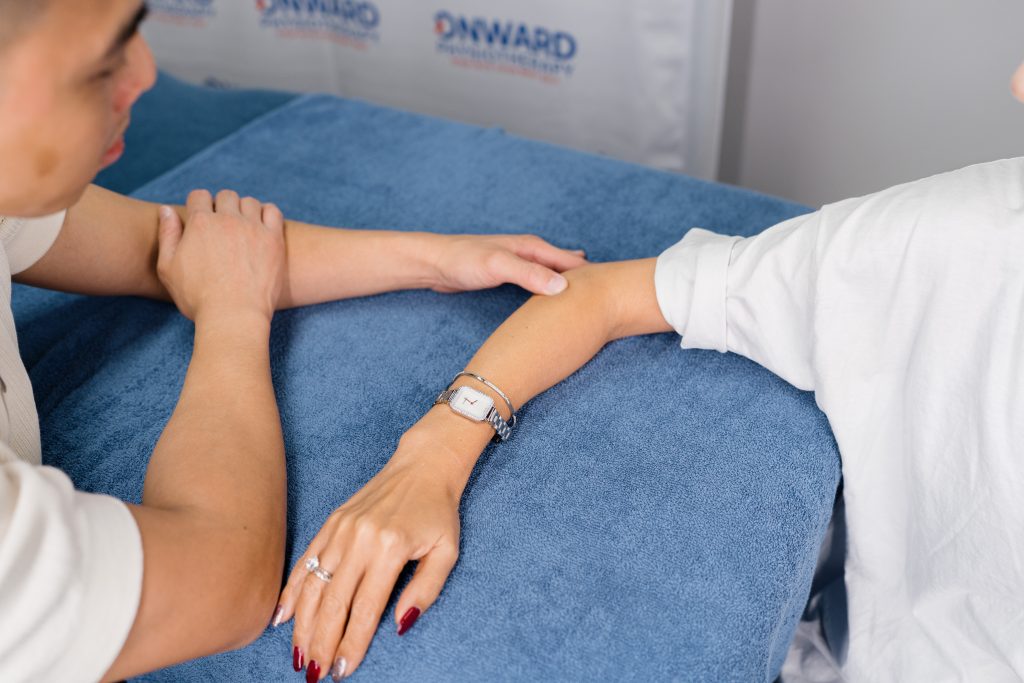
Types of Elbow Pain We Treat
Tennis elbow (lateral epicondylalgia)
Pain on the outer side of the elbow, typically felt with gripping, lifting, or twisting activities. Despite the name, tennis elbow affects far more people who have never played tennis than those who have. It is common in tradespeople, office workers, and those who perform repetitive forearm and wrist tasks. Caused by irritation of the tendons that attach to the outer elbow.
Golfer’s elbow (medial epicondylalgia)
Pain on the inner side of the elbow, often felt with gripping, throwing, or wrist flexion activities. Common in golfers, climbers, throwing athletes, and those who perform repetitive manual tasks. Caused by irritation of the tendons attaching to the inner elbow.
Elbow tendinopathy
A broader term for tendon-related elbow pain that does not resolve as expected. Tendinopathy involves changes to the tendon structure from overload and requires a progressive loading approach to rehabilitation rather than rest alone.
Elbow bursitis
Swelling and pain at the back of the elbow from inflammation of the olecranon bursa. Can follow a direct impact or develop gradually from repeated pressure on the elbow.
Elbow ligament injuries
Injuries to the ligaments of the elbow from a fall, direct contact, or throwing sports. Physiotherapy supports recovery of movement, strength, and stability following ligament sprains.
Nerve-related elbow pain
Including cubital tunnel syndrome, where the ulnar nerve is compressed at the inner elbow, causing tingling, numbness, or weakness in the ring and little fingers. Also including radial nerve irritation at the outer elbow. Nerve-related presentations require assessment of the neck and shoulder as potential contributing sources.
Elbow pain from gym training
Overuse presentations from weightlifting, pull-ups, and other resistance training activities. Common in those who have increased their training volume or introduced new exercises without adequate preparation.
Elbow pain in pole dancers and climbers
Elbow and forearm overuse injuries from the grip demands of pole dancing and climbing, including medial elbow pain, flexor tendinopathy, and nerve irritation.
Post-surgical elbow rehabilitation
Following elbow surgery including tennis elbow release, ligament reconstruction, or fracture fixation, physiotherapy supports recovery of movement, strength, and return to function.
Common Symptoms of Elbow Pain
Elbow pain can present differently depending on the structure involved. Common symptoms include:
– Pain on the outer or inner side of the elbow
– Aching or burning that builds with activity
– Pain when gripping, lifting, or twisting
– Weakness in the hand and forearm
– Tenderness directly over the elbow bony prominences
– Stiffness after rest or first thing in the morning
– Tingling or numbness into the forearm, hand, or fingers
– Swelling at the back of the elbow
– Pain that radiates into the forearm with activity
How Physiotherapy Can Help Elbow Pain
Physiotherapy for elbow pain aims to reduce pain, address the underlying load or movement factors driving the condition, and progressively rebuild the capacity of the tendon or joint to handle the demands of your work, sport, or daily activities.
At Onward Physiotherapy, treatment is tailored to your assessment findings and goals. Depending on your presentation, treatment may include:
– Manual therapy to improve elbow and wrist joint movement
– Soft tissue work for forearm, biceps, and triceps muscle tension
– Progressive tendon loading and strengthening exercises
– Nerve mobilisation techniques for nerve-related presentations
– Assessment of the neck and shoulder as contributing factors
– Dry needling for muscle and tendon pain management where clinically appropriate
– Taping and bracing advice for activity modification during recovery
– Guidance on workstation setup, grip technique, and training load management
– Rehabilitation programs following elbow surgery or fracture
Sessions run for 40 to 45 minutes, giving our physiotherapists enough time to both treat and progress your rehabilitation within each appointment.
What to Expect at Your First Appointment
Your first appointment is 45 minutes. Our physiotherapists will ask about your elbow pain history, how and when symptoms started, what activities aggravate them, and what you want to return to.
A physical assessment follows. This looks at elbow movement, tendon and ligament integrity, grip strength, nerve function, and the contribution of the neck, shoulder, and forearm to your symptoms. From there, a treatment plan is discussed with you, including a realistic timeframe and clear guidance on activity during recovery.
You do not need a referral to book.
Pricing
– Initial consultation: $130 for 45 minutes
– Follow up: $120 for 40 minutes
– Extended consultation: $200 for 90 minutes (for complex or post-surgical presentations)
– Medicare: $61.80 rebate processed on the spot with a Chronic Condition Management Plan from your GP
– WorkCover and CTP: billed direct to your insurer with no out-of-pocket cost
FAQ — Elbow Pain Physiotherapy
How do I know if my elbow pain needs physiotherapy?
If your elbow pain is affecting your ability to grip, lift, work, or exercise, or has been present for more than a few weeks without improvement, physiotherapy is a good next step. You do not need a referral or scan before booking.
Do I need a scan before seeing a physiotherapist for elbow pain?
No. Most elbow pain is assessed and managed effectively without imaging. Our physiotherapists will advise you at your appointment if a scan would provide useful information for your presentation.
Can physiotherapy help with tennis elbow?
Yes. Tennis elbow responds well to physiotherapy. Treatment focuses on progressive tendon loading, addressing the movement and load factors driving the condition, and gradually rebuilding the capacity of the tendon to handle activity. Our physiotherapists will guide you on what to modify during recovery and how to build back up to full activity.
Can physiotherapy help with golfer’s elbow?
Yes. Golfer’s elbow is treated with a similar approach to tennis elbow, using progressive loading to restore tendon capacity alongside hands-on treatment for pain and movement. Contributing factors from the shoulder and neck are also assessed.
How long does it take to recover from tennis elbow?
This varies depending on how long symptoms have been present and the demands being placed on the elbow. Presentations that are caught early often respond within a few weeks. Longer-standing tendinopathy requires a more structured program over several months. Our physiotherapists will give you a realistic timeframe at your first appointment.
Can physiotherapy help with tingling or numbness in the fingers from elbow pain?
Yes. Nerve-related symptoms at the elbow, including cubital tunnel syndrome, are assessed and treated at the clinic. The neck and shoulder are also assessed as potential sources of nerve irritation when these symptoms are present.
Do you treat elbow pain in tradespeople and manual workers?
Yes. Tennis elbow and golfer’s elbow from repetitive manual tasks are among the most common presentations seen at the clinic. WorkCover and Linfox claims are accepted and billed direct to your insurer.
Do you treat elbow pain from gym training or pole dancing?
Yes. Overuse elbow injuries from weightlifting, pull-ups, and the grip demands of pole dancing are treated at the clinic. Treatment addresses the specific structures involved alongside load management and a structured return to training.
How many sessions will I need for elbow pain?
This depends on the condition and how long symptoms have been present. Some presentations improve significantly within a few sessions. Longer-standing tendinopathy requires a more structured program. Our physiotherapists will give you a realistic plan at your first appointment.
Where is the clinic located?
Onward Physiotherapy is at 9 East Street, Lidcombe NSW 2141, inside Studio D at IMI Entertainment. The clinic is close to Lidcombe Station on the T1 and T2 lines and serves patients from across Western and Inner West Sydney including Strathfield, Auburn, Burwood, Parramatta, Rhodes, Homebush, and Sydney Olympic Park.