Hip Pain Physiotherapy
Hip pain is a broad term that covers a wide range of conditions affecting the joint itself, the surrounding tendons and muscles, and the structures that connect the hip to the lower back and pelvis. It can present as a deep ache in the groin, pain on the outer side of the hip, buttock pain, or discomfort that builds during or after activity.
Hip pain affects people across all age groups and activity levels. It is common in runners, dancers, people who sit for long periods, and those returning to exercise after a break. Because the hip sits between the lower back and the knee, problems in either area can also contribute to how the hip loads and moves.
At Onward Physiotherapy in Lidcombe, hip pain is assessed in full context. Our physiotherapists look at the hip joint, the surrounding tendons and muscles, the lower back, the pelvis, and how the whole lower limb is moving together. Getting this picture right at the first appointment leads to more targeted and effective treatment.
Types of Hip Pain We Treat
Gluteal tendinopathy
Pain on the outer side of the hip, often felt when lying on the affected side, sitting with legs crossed, or walking up stairs. Caused by irritation of the gluteal tendons where they attach to the greater trochanter. More common in women and in those who have recently increased their activity level.
Hip bursitis
Inflammation of the bursa on the outer hip, often contributing to the same lateral hip pain pattern as gluteal tendinopathy. The two conditions frequently occur together and are treated with a similar approach.
Femoroacetabular impingement (FAI)
A condition where the ball and socket of the hip joint do not move as smoothly as they should, causing pain in the groin or deep in the hip with activities such as squatting, sitting for long periods, or hip flexion. Common in active individuals and those who played sport during their adolescent years.
Hip labral injuries
The labrum is a ring of cartilage around the hip socket. Tears or irritation of the labrum can cause deep groin pain, clicking, or a sense of catching in the hip. Often associated with FAI.
Hip flexor tightness and strain
Pain or tightness at the front of the hip, common in people who sit for long periods or who run and cycle regularly. Can contribute to lower back pain and affect movement patterns through the hip and pelvis.
SIJ and pelvic pain
Pain around the sacroiliac joint at the base of the spine, often felt as a deep ache in the buttock or lower back that can be mistaken for hip pain. Physiotherapy addresses the joint mechanics and the muscle control around the pelvis.
Hip pain in runners and dancers
Overuse conditions affecting the hip in runners and dancers, including hip flexor tendinopathy, snapping hip, and stress-related presentations. Assessed with an understanding of the specific demands of running and dance.
Hip osteoarthritis
Gradual wear to the hip joint causing pain, stiffness, and reduced range of movement. Physiotherapy focuses on maintaining movement, building strength around the joint, and managing load to support function and quality of life.
Post-surgical hip rehabilitation
Following hip replacement, labral repair, or FAI surgery, physiotherapy supports recovery of movement, strength, and return to function.
Common Symptoms of Hip Pain
Hip pain can feel different depending on what is causing it. Common symptoms include:
– Pain in the groin, outer hip, or buttock
– Aching that builds with walking, running, or prolonged standing
– Pain when lying on the affected side at night
– Stiffness in the morning or after periods of sitting
– A clicking, snapping, or catching sensation in the hip
– Pain with squatting, lunging, or hip flexion
– Discomfort when climbing stairs or walking uphill
– Referred pain into the thigh or knee
– A feeling of weakness or instability through the hip and pelvis
How Physiotherapy Can Help Hip Pain
Physiotherapy for hip pain aims to identify what is driving symptoms, reduce pain, restore movement, and build the strength and control needed to return to your activities without the problem recurring.
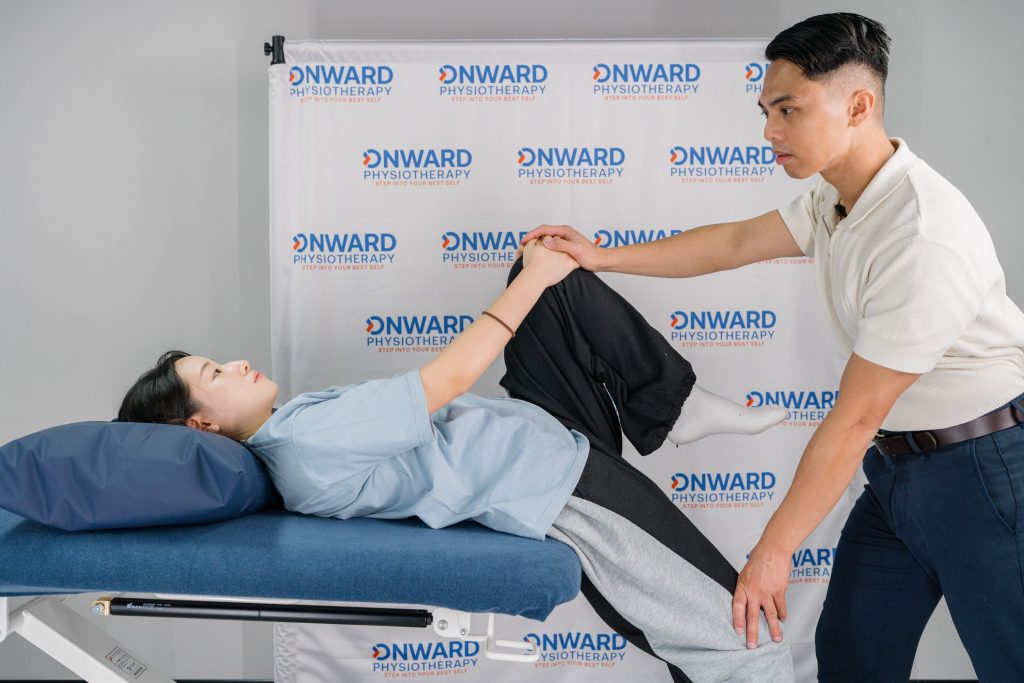
At Onward Physiotherapy, treatment is tailored to your assessment findings and goals. Depending on your presentation, treatment may include:
– Manual therapy to improve hip joint movement and reduce stiffness
– Soft tissue work for hip flexor, gluteal, and surrounding muscle tension
– Progressive gluteal and hip strengthening exercises
– Movement retraining to address loading patterns through the hip, pelvis, and lower limb
– Postural and workstation advice for those with sitting-related hip pain
– Dry needling for muscle tension and pain management where clinically appropriate
– Load management for runners, dancers, and those returning to exercise
– Rehabilitation programs following hip surgery or injury
Sessions run for 40 to 45 minutes, giving our physiotherapists enough time to both treat and progress your rehabilitation within each appointment.
What to Expect at Your First Appointment
Your first appointment is 45 minutes. Joshua will ask about your hip pain history, where symptoms are located, what brings them on, what eases them, and how they are affecting your daily activities and movement goals.
A physical assessment follows. This looks at hip range of movement, joint mechanics, muscle strength and control, lower back and pelvic contribution, and how the whole lower limb is moving. From there, a treatment plan is discussed with you, including a realistic timeframe and clear guidance on activity during recovery.
You do not need a referral to book.
Pricing
– Initial consultation: $130 for 45 minutes
– Follow up: $120 for 40 minutes
– Extended consultation: $200 for 90 minutes (for complex or post-surgical presentations)
– Medicare: $61.80 rebate processed on the spot with a Chronic Condition Management Plan from your GP
– WorkCover and CTP: billed direct to your insurer with no out-of-pocket cost
FAQ — Hip Pain Physiotherapy
How do I know if my hip pain needs physiotherapy?
If your hip pain is affecting your ability to walk, exercise, sleep, or carry out daily tasks, physiotherapy is a good next step. You do not need a referral or scan before booking.
Do I need a scan before seeing a physiotherapist for hip pain?
No. Most hip pain is assessed and managed effectively without imaging. Our physiotherapists will advise you at your appointment if a scan would provide useful information for your presentation.
Can physiotherapy help with outer hip pain?
Yes. Outer hip pain from gluteal tendinopathy or hip bursitis responds well to physiotherapy. Treatment focuses on load management, progressive gluteal strengthening, and addressing the movement habits that are aggravating the tendons.
Can physiotherapy help with hip impingement?
Yes. Physiotherapy is a recommended first approach for femoroacetabular impingement. Treatment addresses hip mobility, the surrounding muscle strength and control, and movement patterns that are loading the joint. Whether surgery is needed depends on how symptoms respond to conservative management.
Can physiotherapy help with hip pain in runners?
Yes. Hip pain in runners is commonly seen at the clinic. Treatment addresses the specific structures involved alongside load management and a structured return to running. Running biomechanical assessments are also available for those who want a more detailed analysis of their technique and injury risk.
Can physiotherapy help with hip pain in dancers?
Yes. Hip conditions in dancers, including snapping hip, hip flexor tendinopathy, and stress-related presentations, are treated at the clinic with an understanding of dance-specific demands and training loads.
How many sessions will I need for hip pain?
This depends on the condition, how long symptoms have been present, and your goals. Some presentations improve significantly within a few sessions. Others, such as gluteal tendinopathy or post-surgical rehabilitation, require a longer structured program. Our physiotherapists will give you a realistic plan at your first appointment.
Is hip pain related to lower back pain?
It can be. The lower back, pelvis, and hip work closely together, and pain or stiffness in one area frequently affects the others. If both are contributing to your symptoms, both are assessed and treated together at Onward Physiotherapy.
Where is the clinic located?
Onward Physiotherapy is at 9 East Street, Lidcombe NSW 2141, inside Studio D at IMI Entertainment. The clinic is close to Lidcombe Station on the T1 and T2 lines and serves patients from across Western and Inner West Sydney including Strathfield, Auburn, Burwood, Parramatta, Rhodes, Homebush, and Sydney Olympic Park.