Shoulder Pain Physiotherapy
Shoulder pain is one of the most common musculoskeletal complaints seen in physiotherapy. The shoulder is the most mobile joint in the body, which makes it highly functional but also vulnerable to injury and overuse. Pain can develop from a single incident, build gradually over time, or arise without any obvious cause.
At Onward Physiotherapy in Lidcombe, shoulder pain is assessed thoroughly to identify what is driving symptoms before treatment begins. The shoulder does not work in isolation. Neck and upper back stiffness, posture, and how the surrounding muscles are working all influence how the joint moves and loads.
Types of Shoulder Pain We Treat
Rotator cuff injuries (rotator cuff related shoulder pain)
The rotator cuff is a group of four muscles that stabilise and move the shoulder. Tears, strains, and tendinopathies of the rotator cuff are common across all age groups and activity levels. Symptoms often include pain with lifting, reaching overhead, or lying on the affected side.
Shoulder impingement (rotator cuff related shoulder pain)
A broad term describing pain that occurs when structures in the shoulder are compressed during movement. Often felt as a painful arc when lifting the arm. Usually driven by a combination of movement patterns, muscle imbalances, and postural factors.
Frozen shoulder (adhesive capsulitis)
A condition involving progressive stiffness and pain in the shoulder joint. Movement becomes increasingly restricted over time. Physiotherapy plays an important role in managing symptoms and supporting recovery across all stages.
Shoulder bursitis (rotator cuff related shoulder pain)
Inflammation of the bursa, a small fluid-filled sac that reduces friction in the shoulder joint. Can cause significant pain with movement and at rest.
AC joint injuries
Injuries to the acromioclavicular joint at the top of the shoulder, often from a fall or direct contact. Common in sport and physically demanding work.
Shoulder instability
A feeling of looseness or giving way in the shoulder, often following a dislocation or from ligament laxity. Physiotherapy focuses on building the muscular control needed to support the joint.
Post-surgical rehabilitation
Following rotator cuff repair, labral repair, or shoulder replacement surgery, physiotherapy supports recovery of movement, strength, and function.
Work and activity related shoulder pain
Shoulder pain from repetitive overhead tasks, heavy lifting, prolonged computer use, or sport. Common in tradespeople, gym training, and throwing sports.
Common Symptoms of Shoulder Pain
Shoulder pain can present in a range of ways depending on the structure involved. Common symptoms include:
– Pain with lifting the arm or reaching overhead
– Aching at rest or pain that wakes you at night
– Weakness when pushing, pulling, or lifting
– A clicking, catching, or grinding sensation in the joint
– Stiffness and reduced range of movement
– Pain that radiates into the upper arm or neck
– Difficulty with everyday tasks such as dressing, reaching behind the back, or carrying bags
How Physiotherapy Can Help Shoulder Pain
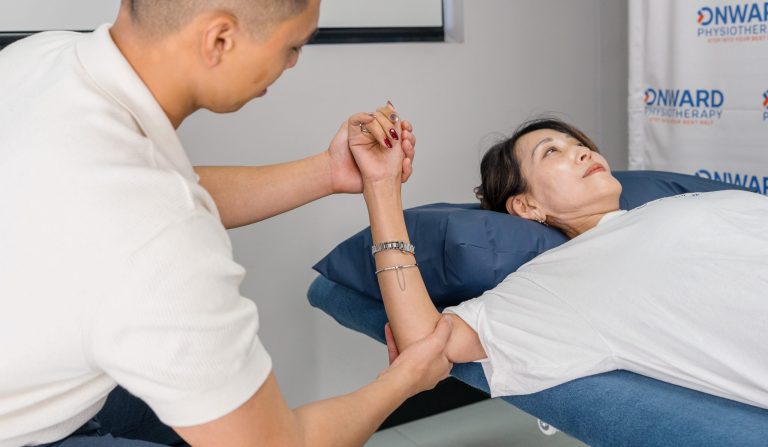
Physiotherapy for shoulder pain aims to reduce pain, restore movement, and rebuild the strength and control needed to return to the activities that matter to you.
At Onward Physiotherapy, treatment is tailored to your assessment findings and goals. Depending on your presentation, treatment may include:
– Manual therapy to improve joint movement and reduce muscle tension
– Rotator cuff and scapular strengthening exercises
– Movement retraining to address how the shoulder blade and joint are working together
– Postural assessment and correction, particularly for desk workers and those with neck involvement
– Dry needling for muscle tightness and pain management where clinically appropriate
– Load management for those returning to sport, gym training, or physical work
– Rehabilitation programs following shoulder surgery or injury
Sessions run for 40 to 45 minutes, giving Joshua enough time to both treat and progress your rehabilitation within each appointment.
What to Expect at Your First Appointment
Your first appointment is 45 minutes. Joshua will begin by asking about your shoulder history, how and when symptoms started, what aggravates and eases them, and how they are affecting your daily activities.
A physical assessment follows. This looks at shoulder movement, strength, joint stability, and how the neck and upper back may be contributing to your symptoms. A clear picture of what is driving your pain is established before treatment begins.
A treatment plan is discussed with you at the end of the first appointment, including a realistic timeframe and guidance on what you can do between sessions to support your recovery.
You do not need a referral to book.
Pricing
– Initial consultation: $130 for 45 minutes
– Follow up: $120 for 40 minutes
– Extended consultation: $200 for 90 minutes (for complex or post-surgical presentations)
– Medicare: $61.80 rebate processed on the spot with a Chronic Condition Management Plan from your GP
– WorkCover and CTP: billed direct to your insurer with no out-of-pocket cost
FAQ — Shoulder Pain Physiotherapy
How do I know if my shoulder pain needs physiotherapy?
If your shoulder pain is affecting your ability to lift, reach, sleep, or carry out daily tasks, physiotherapy is a good next step. You do not need to wait until symptoms are severe or have a scan before booking.
Do I need a scan before seeing a physiotherapist for shoulder pain?
No. Most shoulder pain is assessed and managed effectively without imaging. Joshua will advise you at your appointment if a scan would provide useful information for your presentation.
Can physiotherapy help with a rotator cuff tear?
Physiotherapy is often an effective first approach for rotator cuff injuries, including partial tears. Treatment focuses on reducing pain and building the strength and control of the surrounding muscles. Whether surgery is needed depends on the extent of the tear and how symptoms respond to conservative management.
How long does it take to recover from shoulder pain?
Recovery time varies depending on the condition, how long symptoms have been present, and your goals. Some presentations improve significantly within a few sessions. Others, such as frozen shoulder or post-surgical rehabilitation, require a longer structured program. Joshua will give you a realistic timeframe at your first appointment.
Can physiotherapy help frozen shoulder?
Physiotherapy can help manage pain and maintain as much movement as possible across the stages of frozen shoulder. Treatment is tailored to where you are in the condition’s progression.
Do you treat shoulder injuries from gym training or sport?
Yes. Shoulder injuries from weightlifting, throwing sports, swimming, and contact sports are commonly treated at the clinic. Treatment includes both hands-on management and a structured return to training program.
Do you treat shoulder pain in tradespeople and workers?
Yes. Overhead work, heavy lifting, and repetitive tasks are common causes of shoulder pain seen at the clinic. WorkCover and Linfox claims are accepted and billed direct to your insurer.
Where is the clinic located?
Onward Physiotherapy is at 9 East Street, Lidcombe NSW 2141, inside Studio D at IMI Entertainment. The clinic is close to Lidcombe Station on the T1 and T2 lines and serves patients from across Western and Inner West Sydney including Strathfield, Auburn, Burwood, Parramatta, Rhodes, Homebush, and Sydney Olympic Park.