TMJ Jaw Pain Physiotherapy
Jaw pain, clicking, facial tension, and headaches that seem to come from nowhere are often connected to the temporomandibular joint, commonly referred to as the TMJ. The TMJ is the joint that connects your lower jaw to your skull. It is one of the most frequently used joints in the body, involved in speaking, eating, and swallowing thousands of times each day.
When the TMJ is not moving well, or when the surrounding muscles are overloaded, symptoms can range from localised jaw discomfort to headaches, ear fullness, neck pain, and difficulty opening the mouth fully.
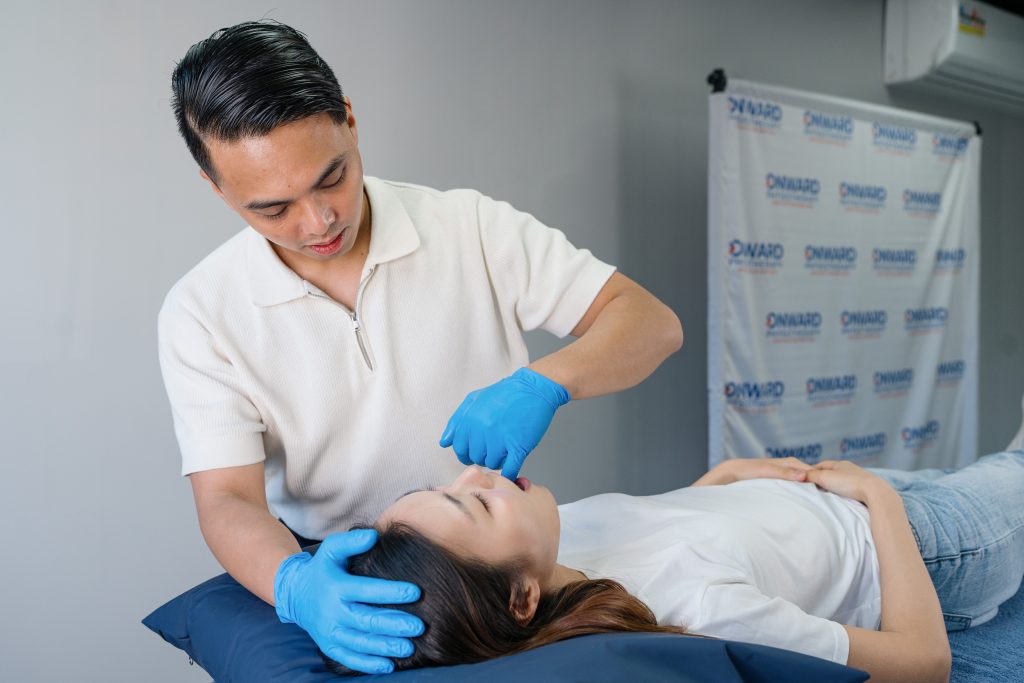
At Onward Physiotherapy in Lidcombe, TMJ physiotherapy is a dedicated service. Joshua has additional training in jaw assessment and treatment beyond standard physiotherapy qualifications, and assesses the jaw and neck together to build a complete picture of what is contributing to your symptoms.
Types of TMJ Conditions We Treat
TMJ pain and muscle tension
Pain and tightness in the jaw muscles and joint, often related to clenching, grinding, or overuse. Can present as aching in the jaw, face, or temples. Frequently worsened by stress.
Jaw clicking and popping
A clicking, popping, or snapping sound when opening or closing the mouth. Can be painless or accompanied by discomfort. In some cases it is related to the position of the disc within the joint.
Jaw locking
Difficulty opening or closing the mouth fully, or a jaw that feels like it catches or gets stuck. Can be related to disc displacement or joint stiffness.
Bruxism and teeth grinding
Habitual jaw clenching or teeth grinding, often during sleep. Can lead to jaw pain, facial tension, headaches, and tooth wear. Physiotherapy addresses the muscular and movement components alongside other management strategies.
Cervicogenic jaw pain
Jaw pain that is driven or contributed to by stiffness and tension in the cervical spine. The neck and jaw share neurological pathways, and neck dysfunction commonly contributes to TMJ symptoms. This connection is frequently overlooked when the jaw is assessed in isolation.
Headaches related to jaw tension
Headaches that arise from jaw clenching, muscle tension in the face and temples, or referred pain from the cervical spine. Physiotherapy addresses the contributing structures rather than the headache symptom alone.
Post-dental procedure jaw stiffness
Jaw stiffness and pain following prolonged dental procedures, extractions, or oral surgery. Physiotherapy supports recovery of normal joint movement and muscle function.
Common Symptoms of TMJ Disorders
TMJ symptoms vary widely between individuals. Common presentations include:
– Pain or aching in the jaw, face, or temples
– Clicking, popping, or grinding sounds when opening or closing the mouth
– Difficulty or discomfort when chewing, yawning, or opening wide
– Jaw stiffness first thing in the morning
– A feeling of tension across the face or around the ears
– Headaches that start around the temples or base of the skull
– Ear pain or a sense of fullness in the ear without an ear infection
– Neck pain and stiffness alongside jaw symptoms
– Teeth grinding or clenching, particularly during sleep
How Physiotherapy Can Help TMJ Pain
Physiotherapy for TMJ disorders aims to reduce pain, restore normal jaw movement, and address the contributing factors that are loading the joint and surrounding muscles.
At Onward Physiotherapy, the jaw and neck are assessed together at the initial appointment. Neck posture, stiffness, and muscle tension frequently contribute to TMJ symptoms and are often missed when the jaw is assessed in isolation.
Depending on your assessment findings, treatment may include:
– Manual therapy to improve TMJ joint movement and reduce stiffness
– Soft tissue work for jaw, facial, and neck muscle tension
– A cervical spine screen to identify and address neck contributions to jaw symptoms
– Targeted exercises to restore jaw movement and muscle coordination
– Postural correction and advice on habits that load the jaw
– Dry needling for jaw and facial muscle tension where clinically appropriate
– Education on clenching and grinding habits and strategies to reduce them
– Coordination with your dentist where a splint or bite adjustment is also part of your management
Sessions run for 40 to 45 minutes, giving our physiotherapists enough time to both treat and progress your rehabilitation within each appointment.
What to Expect at Your First Appointment
Your first appointment is 45 minutes. Our physiotherapists will ask about your jaw symptoms, when they started, what makes them better or worse, and whether you have any associated headaches, neck pain, or dental history.
A physical assessment of the TMJ and cervical spine follows. This looks at jaw opening range, joint mechanics, muscle tenderness, and how the neck is moving and contributing to your presentation.
One type of treatment will commence during the appointment. Then a treatment plan will be discussed with you, including a realistic timeframe and guidance on what you can do between sessions to support your recovery.
You do not need a referral to book.
Pricing
– Initial consultation: $130 for 45 minutes
– Follow up: $120 for 40 minutes
– Medicare: $61.80 rebate processed on the spot with a Chronic Condition Management Plan from your GP
– WorkCover and CTP: billed direct to your insurer with no out-of-pocket cost
FAQ — TMJ Jaw Pain Physiotherapy
How do I know if my jaw pain needs physiotherapy?
If you have jaw pain, clicking, headaches, or facial tension that is affecting your daily life or has been present for more than a few weeks, physiotherapy is worth considering. You do not need a referral or a scan before booking.
Is TMJ physiotherapy different from seeing a dentist for jaw pain?
Yes. Dentists address the structural and bite-related aspects of jaw problems, including splints and dental alignment. Physiotherapy addresses the muscular and joint movement components. The two approaches complement each other. If you have already tried a splint without full relief, physiotherapy addresses what a splint alone does not.
Do I need a referral for TMJ physiotherapy?
No. You can book directly without a GP referral. A referral is only required if you plan to use a Medicare Chronic Condition Management Plan.
Can physiotherapy help with jaw clicking?
Physiotherapy can reduce or resolve jaw clicking in many cases, depending on the underlying cause. A full assessment at the first appointment will clarify what is driving your symptoms and what outcome is realistic for your presentation.
Can stress cause jaw pain?
Yes. Stress-related jaw clenching and teeth grinding are among the most common contributors to jaw pain, facial tension, and headaches. These are assessed and addressed as part of a TMJ physiotherapy treatment plan.
What is the cervical spine screen and why does it matter for jaw pain?
The cervical spine is the neck. Neck posture, stiffness, and muscle tension frequently contribute to TMJ symptoms and are often missed when the jaw is assessed in isolation. A cervical spine screen is included as part of the initial assessment to give a more complete picture of what is contributing to your symptoms.
How many sessions will I need for TMJ pain?
This depends on your presentation. Some patients notice an improvement in symptoms within the first few sessions. More persistent or complex presentations take longer. Joshua will give you a realistic timeframe at your first appointment based on your specific assessment findings.
Can physiotherapy help if I already have a dental splint?
Yes. A splint addresses the bite and protects the teeth, but does not address muscle tension, joint stiffness, or neck contributions to jaw pain. Physiotherapy and a dental splint can work alongside each other as part of a broader management plan.
Where is the clinic located?
Onward Physiotherapy is at 9 East Street, Lidcombe NSW 2141, inside Studio D at IMI Entertainment. The clinic is close to Lidcombe Station and serves patients from across Western and Inner West Sydney including Strathfield, Auburn, Burwood, Parramatta, Rhodes, Homebush, and Sydney Olympic Park.