
Wrist Pain Physiotherapy
Wrist pain is a common complaint that affects people across a wide range of occupations, sports, and daily activities. The wrist is a complex structure involving multiple small joints, tendons, ligaments, and nerves. Pain can develop from a sudden injury such as a fall, build gradually from repetitive tasks, or arise from overuse in sport, gym training, or desk-based work.
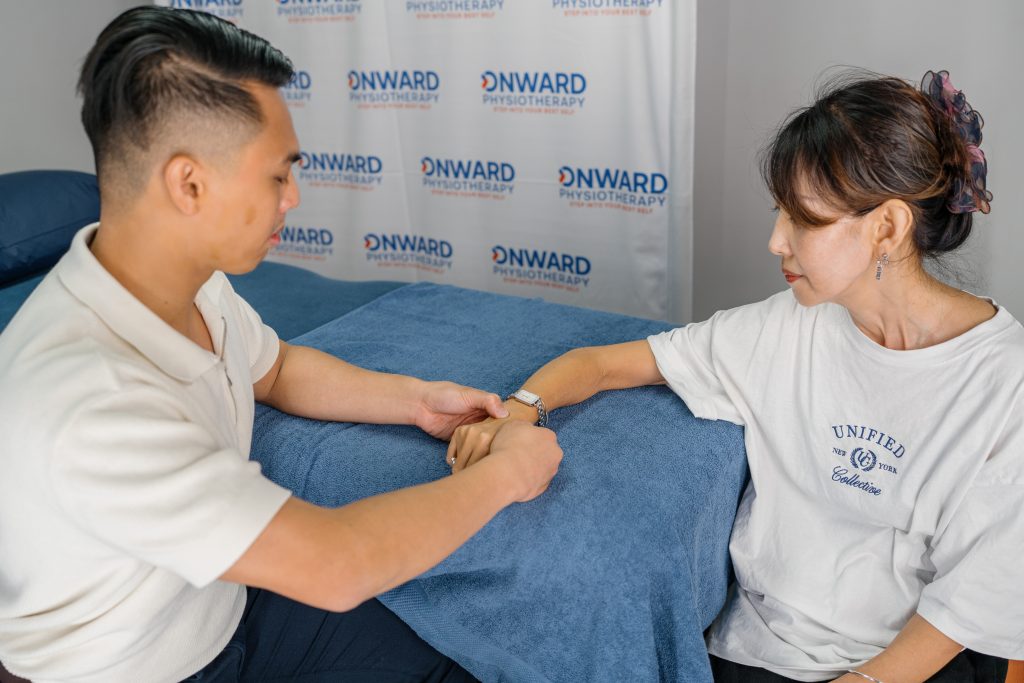
Because the wrist is closely connected to the forearm, elbow, and neck, pain in this area can sometimes be driven or contributed to by structures further up the arm. At Onward Physiotherapy in Lidcombe, wrist pain is assessed in full context. Our physiotherapists consider the wrist, forearm, elbow, and neck together to build a complete picture of what is contributing to your symptoms.
Types of Wrist Pain We Treat
Wrist sprains and ligament injuries
Injuries to the wrist ligaments, commonly from a fall onto an outstretched hand. Sprains range from mild stretching to complete ligament tears. Appropriate early management reduces the risk of ongoing instability and chronic wrist pain.
De Quervain tenosynovitis
Pain and swelling on the thumb side of the wrist, caused by irritation of the tendons that run to the thumb. Often worsened by gripping, pinching, or lifting. Common in new parents, those who perform repetitive thumb and wrist movements, and gym training.
Wrist tendinopathy
Irritation and overload of the tendons around the wrist from repetitive tasks, sport, or a sudden increase in activity. Responds well to a progressive loading approach to rehabilitation.
Carpal tunnel syndrome
Compression of the median nerve as it passes through the carpal tunnel at the wrist. Causes tingling, numbness, and weakness in the thumb, index, and middle fingers. Often worse at night or with sustained wrist positions. Physiotherapy addresses contributing factors including wrist movement, nerve mobility, and the neck and forearm as potential sources of nerve irritation.
TFCC injuries
The triangular fibrocartilage complex is a structure on the inner side of the wrist that provides stability and cushioning. Tears and irritation of the TFCC cause pain on the outer side of the wrist, particularly with rotation and gripping. Common in falling injuries and sports involving racquets, throwing, and gymnastics.
Wrist fracture rehabilitation
Following a distal radius fracture or other wrist fracture, physiotherapy supports recovery of movement, strength, and function after immobilisation in a cast or brace.
Ganglion cysts
Fluid-filled lumps that develop on the wrist, often on the back of the joint. Can cause localised pain and discomfort with certain movements. Physiotherapy addresses any associated movement restrictions and contributing load factors.
Wrist pain from desk work and screen use
Wrist and forearm pain that develops from prolonged keyboard and mouse use, repetitive clicking, or sustained wrist positions. Common in office workers and those working from home.
Wrist pain in gym training, pole dancing, and climbing
Overuse wrist injuries from the load and grip demands of weightlifting, handstands, pole dancing, and climbing. Includes wrist extension pain from pressing movements and flexor tendinopathy from grip-intensive activities.
Wrist pain in dancers
Wrist injuries in dancers from floor work, weight-bearing through the hands, and partnering. Assessed with an understanding of dance-specific demands and training loads.
Common Symptoms of Wrist Pain
Wrist pain can present in different ways depending on the structure involved. Common symptoms include:
– Pain with gripping, lifting, or twisting
– Aching after prolonged keyboard or mouse use
– Swelling or tenderness around the wrist joint
– Stiffness after rest or first thing in the morning
– Tingling or numbness into the fingers
– Weakness in the hand and grip
– A clicking or catching sensation with wrist movement
– Pain on the thumb side or outer side of the wrist
– Reduced range of wrist movement
How Physiotherapy Can Help Wrist Pain
Physiotherapy for wrist pain aims to reduce pain, restore movement, and rebuild the strength and load tolerance needed to return to your activities. For many wrist conditions, the forearm, elbow, and neck contribute to how the wrist is loading and these areas are addressed as part of treatment where relevant.
At Onward Physiotherapy, treatment is tailored to your assessment findings and goals. Depending on your presentation, treatment may include:
– Manual therapy to improve wrist and forearm joint movement
– Soft tissue work for forearm and hand muscle tension
– Progressive tendon loading and strengthening exercises
– Nerve mobilisation techniques for carpal tunnel and nerve-related presentations
– Assessment of the neck, shoulder, and elbow as contributing factors
– Dry needling for muscle and tendon pain management where clinically appropriate
– Taping and splinting advice for activity modification during recovery
– Guidance on workstation setup, grip technique, and training load management
– Rehabilitation following wrist fracture, surgery, or casting
Sessions run for 40 to 45 minutes, giving our physiotherapists enough time to both treat and progress your rehabilitation within each appointment.
What to Expect at Your First Appointment
Your first appointment is 45 minutes. Our physiotherapists will ask about your wrist pain history, how and when symptoms started, what activities aggravate them, and what you want to return to.
A physical assessment follows. This looks at wrist and forearm movement, ligament and tendon integrity, grip strength, nerve function, and the contribution of the elbow, shoulder, and neck to your symptoms. From there, a treatment plan is discussed with you, including a realistic timeframe and clear guidance on activity during recovery.
You do not need a referral to book.
Pricing
– Initial consultation: $130 for 45 minutes
– Follow up: $120 for 40 minutes
– Extended consultation: $200 for 90 minutes (for complex or post-surgical presentations)
– Medicare: $61.80 rebate processed on the spot with a Chronic Condition Management Plan from your GP
– WorkCover and CTP: billed direct to your insurer with no out-of-pocket cost
FAQ — Wrist Pain Physiotherapy
How do I know if my wrist pain needs physiotherapy?
If your wrist pain is affecting your ability to grip, type, exercise, or carry out daily tasks, or has been present for more than a few weeks without improvement, physiotherapy is a good next step. You do not need a referral or scan before booking.
Do I need a scan before seeing a physiotherapist for wrist pain?
No. Most wrist pain is assessed and managed effectively without imaging. Our physiotherapists will advise you at your appointment if a scan would provide useful information for your presentation.
Can physiotherapy help with carpal tunnel syndrome?
Yes. Physiotherapy is a recommended first approach for carpal tunnel syndrome. Treatment addresses wrist movement, nerve mobility, and contributing factors from the forearm, elbow, and neck. Our physiotherapists will also advise on activity and workstation modifications that reduce pressure on the nerve during daily tasks.
Can physiotherapy help after a wrist fracture?
Yes. Following a period of immobilisation in a cast or brace, physiotherapy supports recovery of wrist movement, forearm strength, and return to function. Early rehabilitation after cast removal leads to better long-term outcomes.
Can physiotherapy help with De Quervain tenosynovitis?
Yes. De Quervain tenosynovitis responds well to physiotherapy. Treatment includes hands-on management for pain and movement, progressive loading of the affected tendons, and guidance on modifying the activities that are aggravating symptoms.
Can physiotherapy help with wrist pain from desk work?
Yes. Wrist and forearm pain from prolonged keyboard and mouse use is a common presentation at the clinic. Treatment includes hands-on work alongside practical advice on workstation setup, grip technique, and strengthening exercises suited to your daily routine.
Do you treat wrist pain from gym training or pole dancing?
Yes. Wrist overuse injuries from weightlifting, handstands, and the grip demands of pole dancing are treated at the clinic. Treatment addresses the specific structures involved alongside load management and a structured return to training.
Can physiotherapy help with tingling or numbness in the fingers?
Yes. Tingling and numbness in the fingers can come from the wrist, forearm, elbow, or neck. Our physiotherapists assess all of these areas to identify the source and direct treatment appropriately.
How many sessions will I need for wrist pain?
This depends on the condition and how long symptoms have been present. Some presentations improve significantly within a few sessions. More complex conditions such as TFCC injuries or post-fracture rehabilitation require a longer program. Our physiotherapists will give you a realistic plan at your first appointment.
Where is the clinic located?
Onward Physiotherapy is at 9 East Street, Lidcombe NSW 2141, inside Studio D at IMI Entertainment. The clinic is close to Lidcombe Station on the T1 and T2 lines and serves patients from across Western and Inner West Sydney including Strathfield, Auburn, Burwood, Parramatta, Rhodes, Homebush, and Sydney Olympic Park.