
Physio Services
Dance Physio
Keep dancing at your best with physiotherapists who understand the unique demands on your body. We’ve had training from the Australian Ballet’s artistic health team, worked at events like the Australian Dance Festival and treated many dancers from IMI Entertainment.
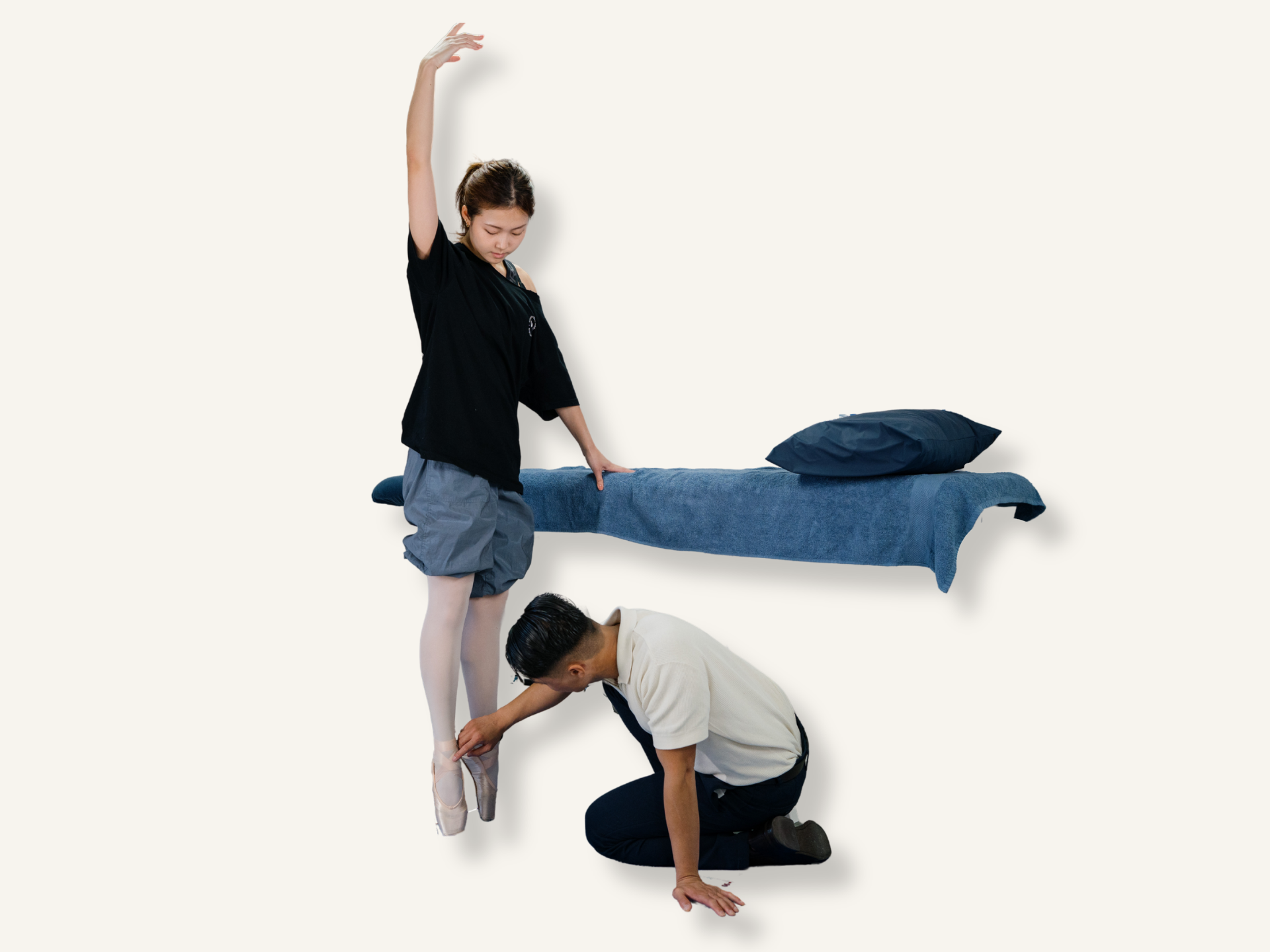


Our hands on treatments and personalised exercise programs help you build strength, flexibility, and balance, so you can return to dancing confidently and reduce your risk of injury.
Whether you’ve had a tough experience with physio before, are short on time, or aren’t sure how we can help, we’re here to listen and work with you, on your schedule, at your pace. From ballet to hip hop to pole, we support all dance styles with tailored physiotherapy.
Click book now or call to start.

Dance Physiotherapy
There wasn’t a physio nearby who really understood dancers or dance injuries.
I thought the pain was just normal for dancers, so I didn’t think it needed treatment.
I was afraid they’d tell me to stop dancing, and I didn’t want to lose training time.
Honestly, I wasn’t sure how physio could actually help with my dance injuries or performance.
It seemed expensive, and I wasn’t sure if I could afford the sessions.
My schedule is packed with rehearsals and performances I just didn’t have the time.
I had a bad experience with a physio before, so I wasn’t keen to go back.
I thought the injury would get better on its own, so I ignored the early signs.
We understand that as a dancer, you might worry about pain being “just part of the job,” or fear that seeing a physiotherapist means you’ll have to stop dancing. At Onward Physiotherapy, our dance physiotherapy is designed specifically for you and the unique demands of your art.
Frequently Asked Questions
Why do dancers get injured in the lead up to a showcase?
Injury risk often rises when training load increases quickly, such as adding extra classes, rehearsals or sessions in the weeks before a showcase, competition or exam. Injury risk is high here especially if you don’t do regular strengthening. Your physiotherapist can help you plan your training load in the lead up, adjust it around any pain, and build up the strength to handle the extra sessions.
How much does dance physio cost?
A 40 minute dance physio initial consultation is $130 and a 30 minute follow up is $120, the same as a standard physiotherapy session with us. Pre-pointe assessments and 80 minute extended consultations are $200. You don’t need a referral to see us. Private health fund rebates can be claimed on the spot.
What are common dance injuries that you treat?
Dance injuries are commonly seen at the foot and ankle, knee, hip, back and shoulder. These include ankle sprains, pain at the back of the ankle when en pointe in ballet, Achilles and big toe pain, knee fat pad impingement in hip hop, open and choreo styles, hip pain or snapping hip in turnout or extensions, low back pain in backbends or arabesque in ballet or pole, and shoulder pain in arm heavy styles like waacking.
Why does waacking hurt my shoulder?
Waacking involves fast, repeated arm rotations and whipping movements around and above the head, which places high load on the rotator cuff muscles of the shoulder. Shoulder pain is common in dancers who take on more waacking style choreography before their rotator cuff is conditioned for that level of load. Gradually strengthening the rotator cuff and building up waacking training over time can help the shoulder handle the demands of that style. Your physiotherapist can assess your shoulder and set a strengthening plan that fits around your classes.
Why does my lower back hurt when I dance?
Lower back pain in dancers is often linked to repeated backward bending, such as in arabesque, cambré and backbends. In teenage dancers, back pain that is worse with backbends and does not settle should be assessed, as it can be a sign of a bone stress injury. Your physiotherapist will assess your back and hip control and refer you for imaging if needed.
How long does a high hamstring tear take to heal?
With a proximal hamstring tear, many people can move freely again within a few days, but lingering pain can last up to a year. This pain is usually felt high up the back of the thigh, up to the sit bone (ischial tuberosity), and is often noticed when sitting, stretching or kicking. In dancers, these injuries commonly happen in splits, high kicks and overstretching. If you felt a pop with major bruising or weakness, see a physiotherapist or doctor promptly, as a complete tear may need a specialist review.
Do you work with dance teachers and studios?
Yes. With the dancer’s consent, the physiotherapist can send reports and updates to the dance teacher so the dancer can still participate in class at some capacity while they do their rehab. Onward Physiotherapy also gives talks to dance studios.
What is hypermobility, and why does it matter for dancers?
Hypermobility means joints that move beyond the typical range, which is common in dancers is often screened using the Beighton score. Hypermobile dancers may need extra strength and control to support their range, particularly in their feet, ankles and hips. Hypermobility screening is a part of dance and pre-pointe assessments at Onward Physiotherapy.
Do I have to stop dancing when I'm injured?
Not always. Where it is safe, your physiotherapist will modify what you do in class so you can keep dancing while your injury recovers, then follow a graded plan back to full dancing. A dance specific strength and conditioning program is a part of every return to dance.
When is my child ready for pointe?
International guidelines suggest not starting pointe before 12 years of age, and dancers are only rarely ready at 11. In addition to age, a pre-pointe assessment test flexibility, strength, control, balance and technique. This gives the dancer, parents and teacher a clear result on their readiness for pointe, plus what to keep working on to perform at their best and address issues that may put them at risk of injury.
What is included in a pre-pointe assessment?
A pre-pointe assessment at Onward Physiotherapy is an 80 minute appointment ($200) that tests flexibility like pointe range, strength like calf endurance for relevés, control, balance, technique like with pirouettes. The dancer receives an exercise program, and the dance teacher receives a report of the results. If a dancer is not yet ready, further physiotherapy sessions are booked to help them address the areas they need to improve in.
What dance styles do you treat?
We have seen dancers from various genres including ballet, contemporary, choreography, hip hop, pole dancing, physie, waacking and Irish dancing. Our assessment approach is tailored to the demands of your dance genre.
Our Services
Our clinic offers a wide range of physiotherapy services designed for dancers, runners, and everyday people. Whether you’re recovering from injury, managing chronic pain, or aiming to optimise your physical performance, we offer hands-on, one on one care tailored to your goals


Book an appointment
Onward Physiotherapy provides personalised, hands on care to help you move better, feel stronger, and get back to doing what you enjoy.